
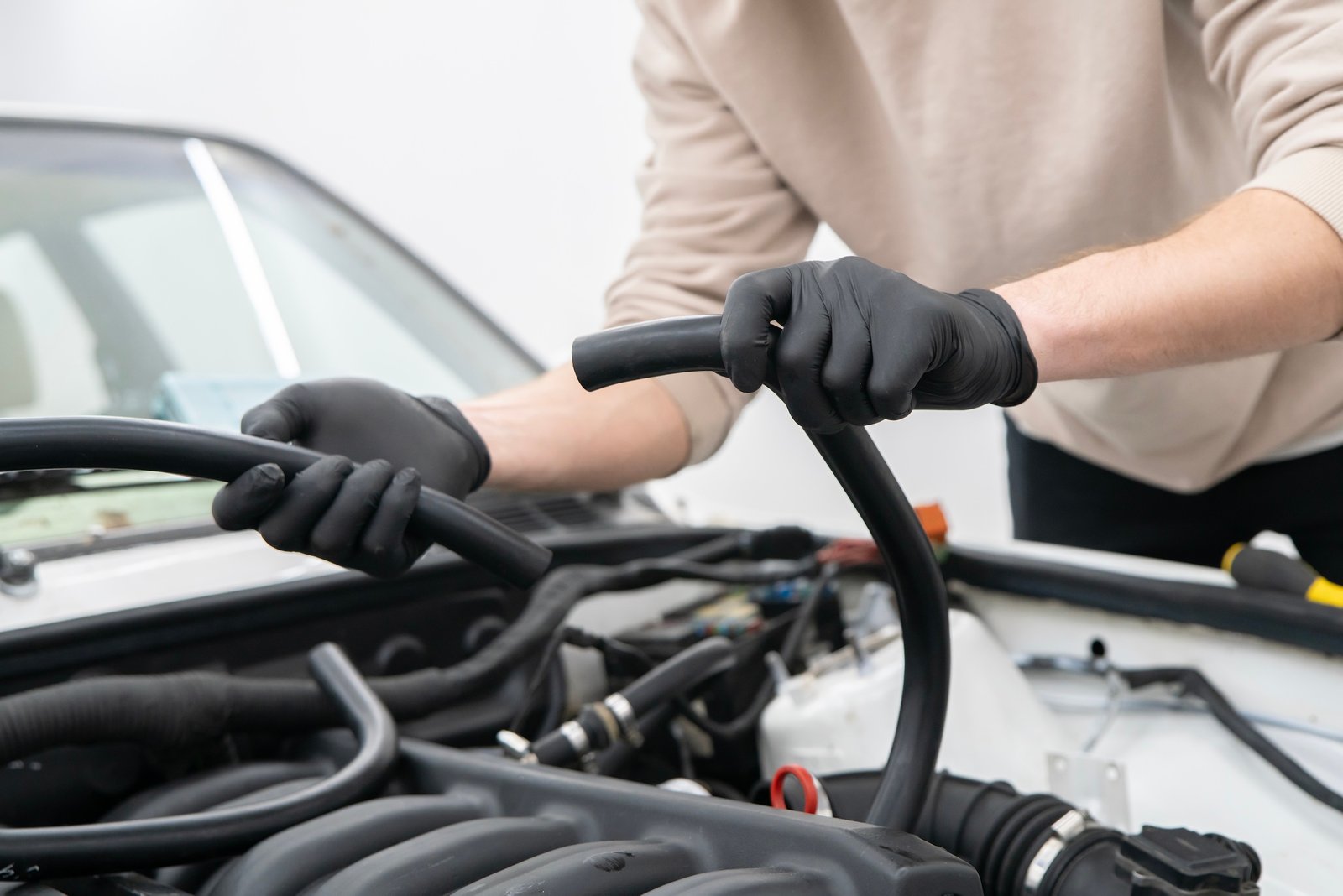
While most drivers focus on batteries and tires during winter, a vehicle’s network of rubber hoses is one of the most overlooked trouble spots. These components carry coolant, manage vacuum pressure, and support vital engine-management systems. When temperatures drop, rubber loses its flexibility and becomes brittle, leading to “silent failures” that can disrupt performance without warning. This month’s blog takes a closer look at how harsh winter conditions affect your vehicle’s hoses and the subtle symptoms that follow.
Why Cold Weather is Hard on Rubber
Rubber is designed to flex as an engine heats and cools. However, freezing temperatures stiffen the material, making it prone to “cold-leakage.” Tiny cracks—especially in older hoses or those exposed to oil residue—can expand under pressure. Because winter air is dry and engine surfaces are hot, leaking fluids often evaporate before they ever hit the ground, leaving no puddles to alert the driver.
Subtle Symptoms to Watch For
Because these issues are often intermittent, they may not trigger a dashboard warning light. Watch for these red flags:
- Performance Issues: Rough idling, hesitation during acceleration, or poor fuel economy.
- Climate Control: Intermittent loss of cabin heat or a heater that takes too long to warm up.
- Audible Clues: Whistling or hissing sounds from the engine bay.
- Fluid Loss: Slowly dropping coolant levels with no visible leaks.
Vacuum and Cooling System Risks
Vacuum leaks are particularly deceptive; a microscopic split can let in just enough air to confuse the engine’s computer, causing “stumbling” during drives. Similarly, a weakened coolant hose may only seep when the engine reaches full operating temperature. If ignored, a small winter crack can lead to a major overheating event once the weather warms up.
Proactive Winter Maintenance
Preventing a breakdown starts with a quick visual and physical check:
- The Squeeze Test:With the engine cool, hoses should feel firm but flexible—not brittle or “mushy.”
- Check Connections:Cold cycles can loosen clamps; ensure all fittings are secure.
- Clean Residue:Wipe away oil or chemical buildup, which degrades rubber.
- Monitor Levels:Check your coolant reservoir weekly to catch slow, silent leaks.
Don’t let a small piece of rubber sideline your vehicle. Staying alert to these quiet warning signs will keep your vehicle reliable all winter long. If you think there’s an issue with your vehicle’s hoses, contact the service professionals at Colonial Service Station to schedule a full inspection or repairs.