
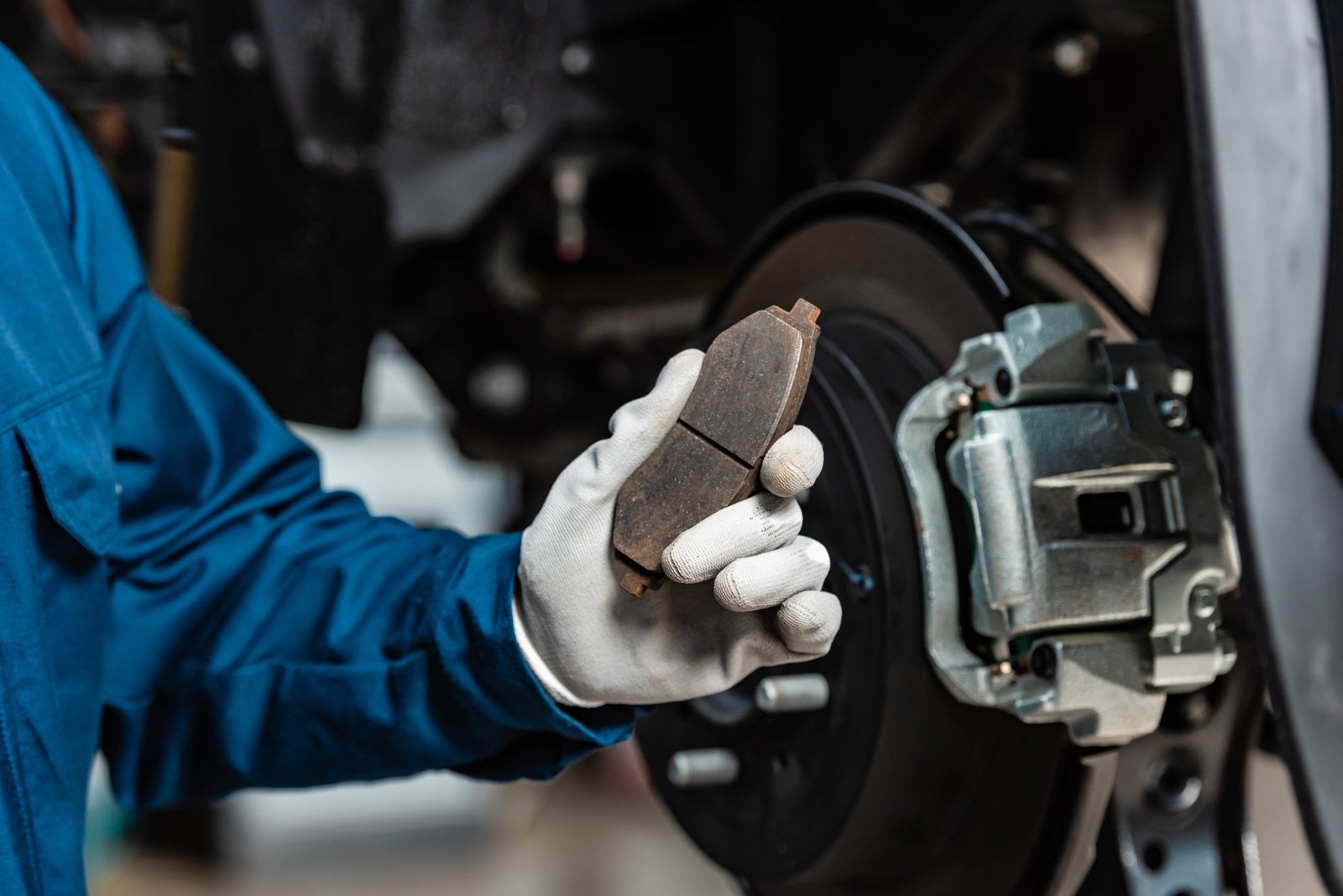
A critical component of any vehicle is its braking system, and the often-overlooked brake pad plays a vital role in ensuring the safety of the vehicle and its occupants. In this month’s blog, we examine how these components function, recognizing signs of brake pad wear, and maintaining them properly which is essential for every vehicle owner.
The Function of Brake Pads
Brake pads are typically made from one of three main material types: organic (nonasbestos), semimetallic, or ceramic. Each has a different blend of fibers, metals, and resins that affect performance, durability, and cost.
Brake pads operate on a principle of friction. When the vehicle operator depresses the brake pedal, hydraulic fluid pressurizes the brake calipers. These calipers force the brake pads against the vehicle’s rotors, creating the friction necessary to slow or stop the vehicle. This simple yet powerful mechanism is what allows the vehicle to control its speed effectively.
Common Brake Pad Issues
Typically, issues with brake pads involve wear and tear. Because the pads are designed to wear down as they convert kinetic energy into thermal energy, they gradually diminish in thickness. Common issues include uneven wear, which can be caused by caliper problems, or overheating, which can compromise the pad material and reduce stopping power.
Signs of Failing Brake Pads
The most noticeable sign that a vehicle needs replacement brake pads is a change in braking sound. Many brake pads incorporate a small, metallic indicator that creates a high-pitched squealing noise when the pad material has worn down to a minimum safe thickness. Other signs include a grinding sound, which indicates the pads are completely worn and the metal backing plate is contacting the rotor, or a spongy feeling when depressing the brake pedal. If a vehicle exhibits shaking during braking, this may indicate rotor damage related to worn pads.
Brake Pad Service
When a vehicle’s brakes are serviced, the technician will inspect the entire system. This often involves removing the wheels and examining the brake pads, rotors, and calipers. Worn brake pads are removed and replaced with new ones. If the rotors are damaged or worn beyond specification, they are either resurfaced or replaced. Calipers are inspected for leaks or sticking.
To extend the life of a vehicle’s brake pads, maintaining smooth and predictable driving habits is recommended.
- Avoid unnecessary, hard braking. Allowing the vehicle to decelerate naturally before applying the brakes gently will reduce excessive heat and friction, thereby prolonging the functional life of the pads and the entire braking system.
- Regular inspections during routine vehicle maintenance checks are the best way to catch minor issues before they become major safety concerns.
If you would like your brake pads checked for excessive wear, contact the service professionals at Colonial Service Station to schedule an inspection.